
My mission is “making successful people successful sooner.” Sarah and I came up with that mission statement 42 years ago. Hold that thought.
I now own a copy of Success With Heart Failure Revised: Help and Hope for Those with Congestive Heart Failure by Marc Silver, MD.
Congestive heart failure: That’s what I had, and one of the reasons I’ve was away from the microphone for most of December, 2021 through January 2023.
The first paragraph of Success Through Heart Failure offers great advice for anyone facing adversity.
Chapter 1 is titled: Don’t Be Angry. Silver writes: “I feel I must say a few words about anger and emotions before I delve into other topics. Heart failure, in reality, is commonly a chronic disease process, meaning that although there is often not a complete cure, there are ways to improve and stabilize the condition and certainly better ways to understand and live with it. However, when most patients initially hear the words heart failure, which is indeed an unfortunate fortunate term, they equate the term with fatality, and an array of emotions emerge—or, more often, don’t emerge—and eventually impact relationships the patient has with physicians, nurses, and family members.”
When I recorded my last bit of audio content in early December 2021, I could barely say two sentences without pausing. I had shortness of breath and no longer had the energy to walk the 11 minutes to the office. I was taking the elevator instead of the 24 stairs to my second-floor office. That is classic denial.
Finally, I went to the emergency room. “You have A-fib and congestive heart failure,” said the doctor. I couldn’t feel my heart beating 155 times per minute, but it was.
Yes, I was angry. At first. And, yes, my self-talk was, This shouldn’t be happening to me. I worked out and ate right. Then, I started thinking of some of the things I still did wrong. And I decided not to think or say, This shouldn’t be happening to me again.
And I didn’t.
I accepted what was happening. And that acceptance helped me focus on the positive steps I could take to heal.
Early in my sales training career, I ran across this definition of training: “Training is a planned program, designed to impart specific knowledge, skills and attitudes to increase desired behavior in measurable ways.”
Therefore, this article constitutes sales training because I’m talking about attitude.
Psychologist Julie Colwell, PhD is the author of The Inner Map Navigating Your Emotions to Create the Life You Want.
Here’s her take on this: “What is happening shouldn’t be happening. We seem to share a cultural perspective that, with enough planning, foresight, or thoughtfulness, we can make life predictable, keep it under control. The corollary to this is that, when something unplanned happens, it is a personal failure. Much criticism in relationships comes out of this:
‘If you’d paid that bill on time, we wouldn’t have these extra charges.’
‘Why are you having such a big reaction? I’ve never liked this kind of food.’
‘What were you thinking! You should have known that those ideas would never work.’
Keeping our attention on what we should have done to keep what is happening from happening is the perfect recipe for self-hatred. The self-flagellation that comes from thinking we should have been able to keep what is happening from happening is really an inside-out version of believing we should be able to control the uncontrollable. It also means we’re watching the wrong show. We’re looking back to the past, with some analysis of what we should/could/would have done. But it’s already been done. It’s over.
The alternative is to come into the present. All the research that money can buy won’t keep the present from being what it is. (Look at New Coke.) And placing our attention on the past keeps us from facing into all the details of what is going on around us right now–which is where we can actually do something, respond and take actions towards what we really want.
How much of your energy goes into trying to correct what has already happened? What would it be like for you to squarely be with what is, right now, with no thought of trying to make the past different? How does that change your personal effectiveness? Your serenity?”
Staying in the present has helped me a lot. Doctors, friends and relatives have said, “You have such a good attitude.” I look forward to my cardiologist saying, “This is the plan. Here are the next steps. Let’s go
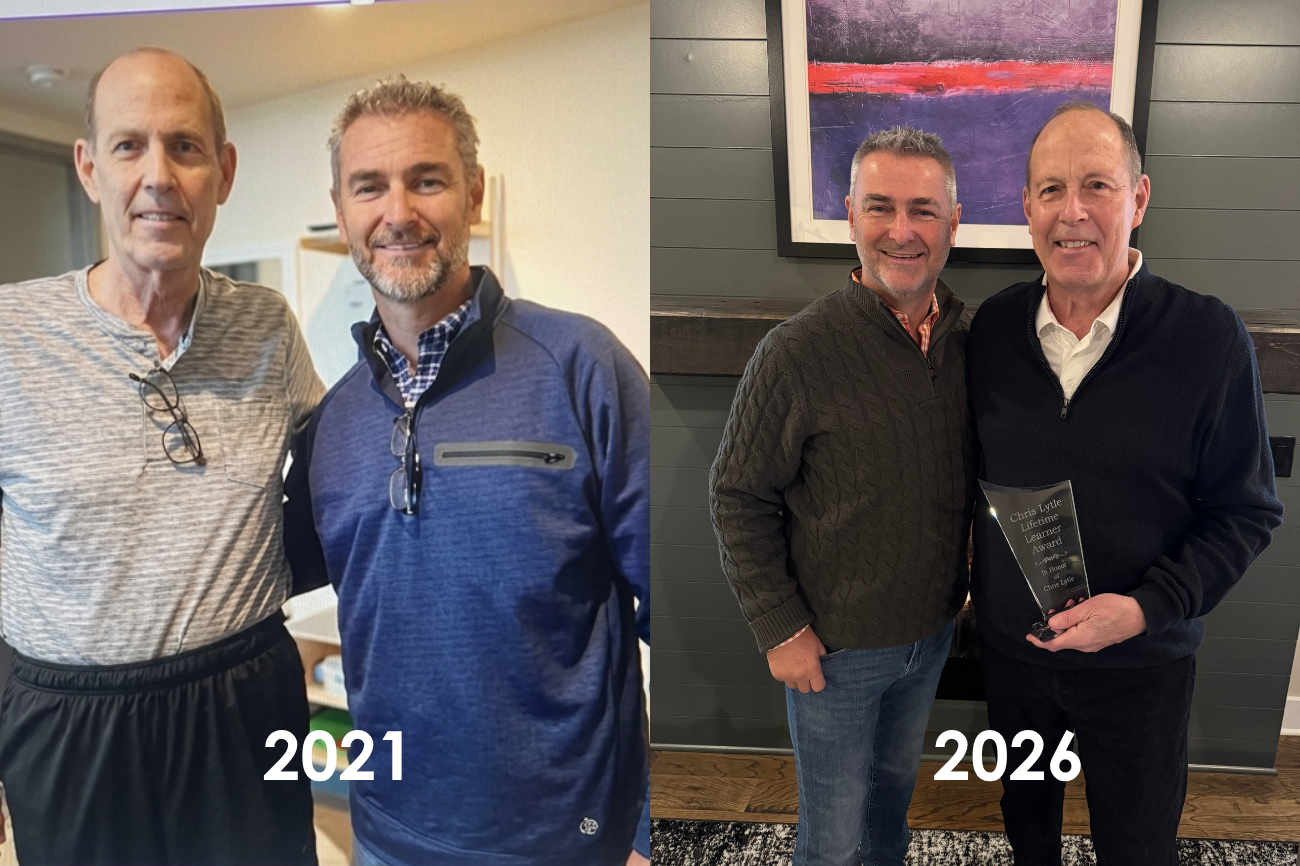
I was hospitalized for 29 days. It was a journey I wouldn’t have chosen, but I’m grateful that I’m still here and still helping to make successful people successful sooner.
Thanks for your patience if you wondered where I was back then. Glad to be back. And a shoutout to Derron Steenbergen who visited me in Nashville as I was recovering.